


The artist has handed over the complete sum of his twenty-five thousand pound award cash to the Music Venues Trust, which functions to preserve the Britain's grassroots concert spaces.
He was awarded the prize on October 16 as his latest record the album was named the top album of the previous year.
The musician has decided to give the cash to the Music Venues Trust, in acknowledgment of the essential function small stages fulfilled in his beginning days.
"I couldn't be pursuing this success if it weren't for all the performances I performed around the region, and further afield, when I was starting out," said the artist. "These spaces are legendary, but they are in difficulty."
Since the start of 2023, over 150 of these spaces have permanently closed – about 16% of the whole industry in the UK.
Over the past year, major artists including Pulp, the group Coldplay, Katy Perry and Ed Sheeran have all backed the MVT in its initiatives to keep the scene afloat, by including a small levy to their ticket costs, which supports independent venues.
Fender also joined in, raising more than £100,000 on his recent tour to support numerous grassroots venues across Britain.
The donation assisted locations that were facing imminent closure due to challenges caused by water damage, fire incidents and bereavements, as well as permit problems, conflicts and noise complaints.
Other venues received financial assistance in upgrading infrastructure and sound and lighting systems that directly benefitted musicians and concertgoers.
"The concept that revenue from shows in large arenas backs the smaller venues, where it kicks off for artists like me, is just sensible," the star has said.
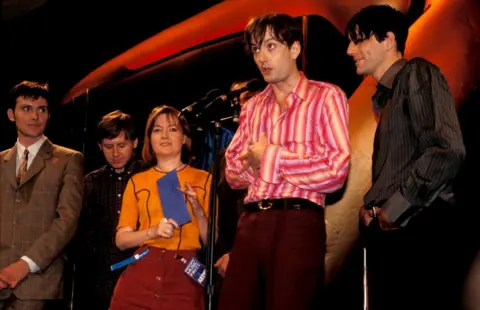
Fender is not the first artist to contribute his Mercury Prize prize money to charitable organizations.
In Pulp won the award in the year 1996 for their release Different Class, lead singer Jarvis Cocker declared that the band would contribute their cash to the organization War Child.
In 2002, musician Ms Dynamite split her prize between multiple organizations, such as the NSPCC and a Sickle Cell charity.
"I also gave a £1,000 to the center, to their classes, because I trained in gymnastics when I was younger and they needed better apparatus," the artist explained to a publication.
Two years ago, they donated their prize money to the youth organization that nurtured their act, alongside other grassroots music organisations.
Also the 1994 recipients they contributed their award to a MS organization after a close contact was found to have the disease.
"The victory was ample," remarked artist Small. "The cash was the cherry on top but we didn't need the cherry, because we had the honor. So our victory impacted another person's life."
In the past week, the MVT shared it had saved two grassroots venues in south-east England, by transferring them to community ownership.
One venue in Southampton and the other in Bristol were purchased under the Own Our Venues scheme, which is supported by a national body and music fans who purchase "ownership units" in the venues.


